
Insights · Waterfalls · July 2026 · 6 min
The silent waterfall error.
The most expensive mistake in JV modeling is not a broken formula. It is a waterfall that calculates cleanly and allocates wrongly.
The most expensive mistake in JV modeling is not a broken formula. It is a waterfall that calculates cleanly and allocates wrongly.
A promote waterfall has one job: split every dollar the deal produces according to the agreement, in the right order, with nothing left over. Most waterfall models pass that last test. The dangerous ones fail the middle one, quietly.
The classic version of the error sits in how the model defines LP profit. The agreement says the GP earns a promote on profits above the preferred return. The model, trying to be helpful, floors each year's LP profit at zero before feeding it into the promote tiers. It looks harmless. It is not.
Flooring yearly profit means capital contributions never net against distributions inside the promote math. Early-year outflows disappear from the calculation, the hurdle account grows from a base that is too high, and the promote starts paying before the LP is actually whole. In a deal we rebuilt during testing, this single decision moved the GP's share of profits from the high teens to over forty percent. Every formula in that file computed exactly what it was told to. The file was still wrong.
Because the total always ties. Every dollar is allocated to someone, the audit row at the bottom reads zero and the model looks disciplined. The error is not in the arithmetic. It is in the definition, and definitions do not throw error flags.
The only reliable catch is reconciliation against an independent replica: rebuild the waterfall from the agreement in a second engine, run both on the same cash flows and compare the splits year by year. If the two disagree, one of them is reading the agreement wrong, and now you know to look. Agreement between a model and itself proves nothing.
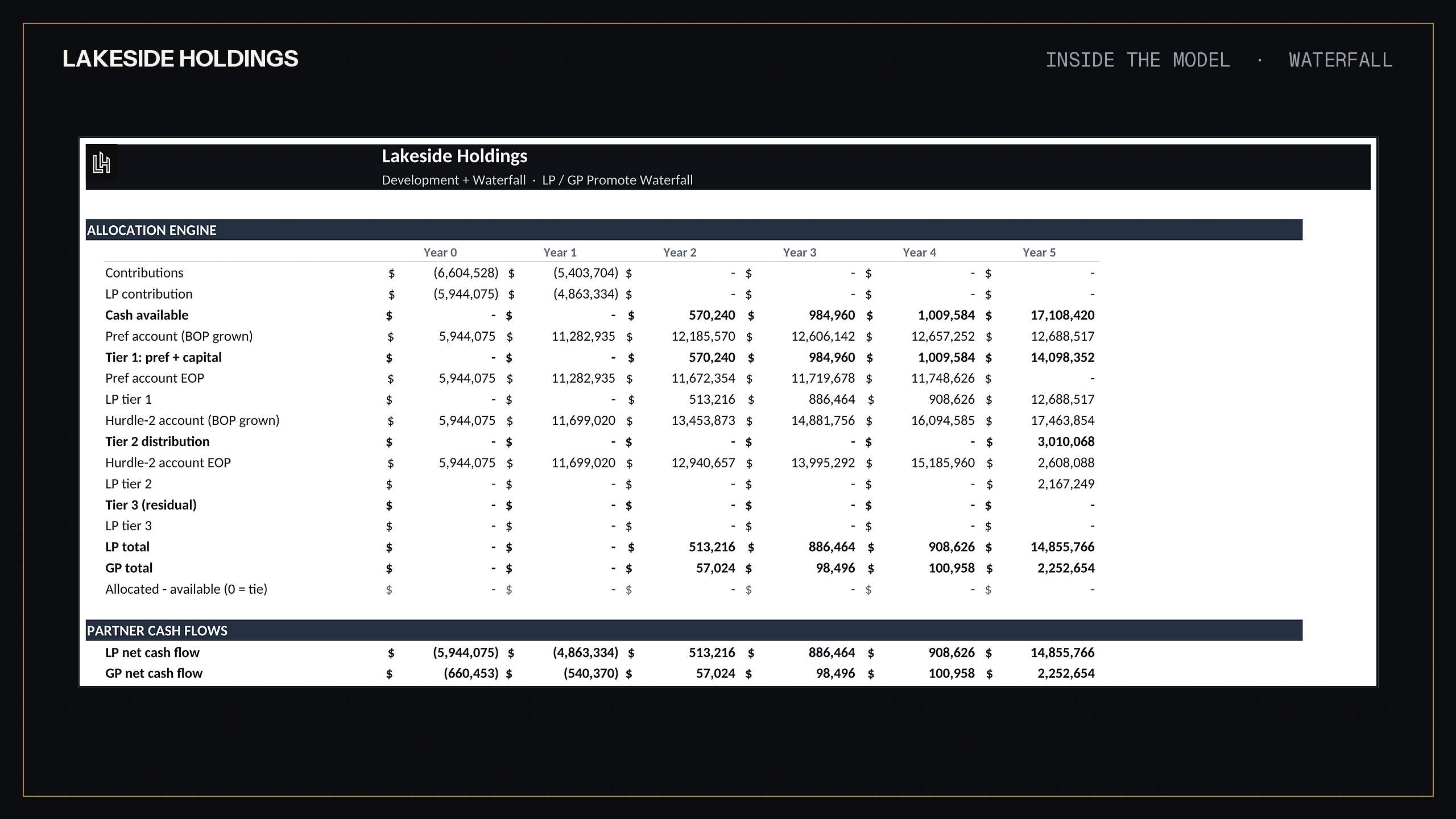
Trace the LP profit line back to its source. If it is floored at zero year by year, test a deal with a capital call after year one and watch what the promote does. Check whether hurdle accounts settle before they grow, and whether the catch-up targets a share of profit or a share of distributions; those are different numbers. And insist on an allocation audit row that ties LP plus GP plus fees to the gross cash line, every year, visibly.
Every waterfall engine in the Lakeside library carries those audit rows on the face of the sheet, and every one was reconciled against an independent replica before release. That is not a feature. It is the minimum standard for a file that decides who gets paid.
We use an essential cookie to remember your preferences and privacy-first analytics that collect no personal data. By continuing you accept our Cookies Policy.We use one essential cookie and privacy-first analytics. Read the Cookies Policy.